
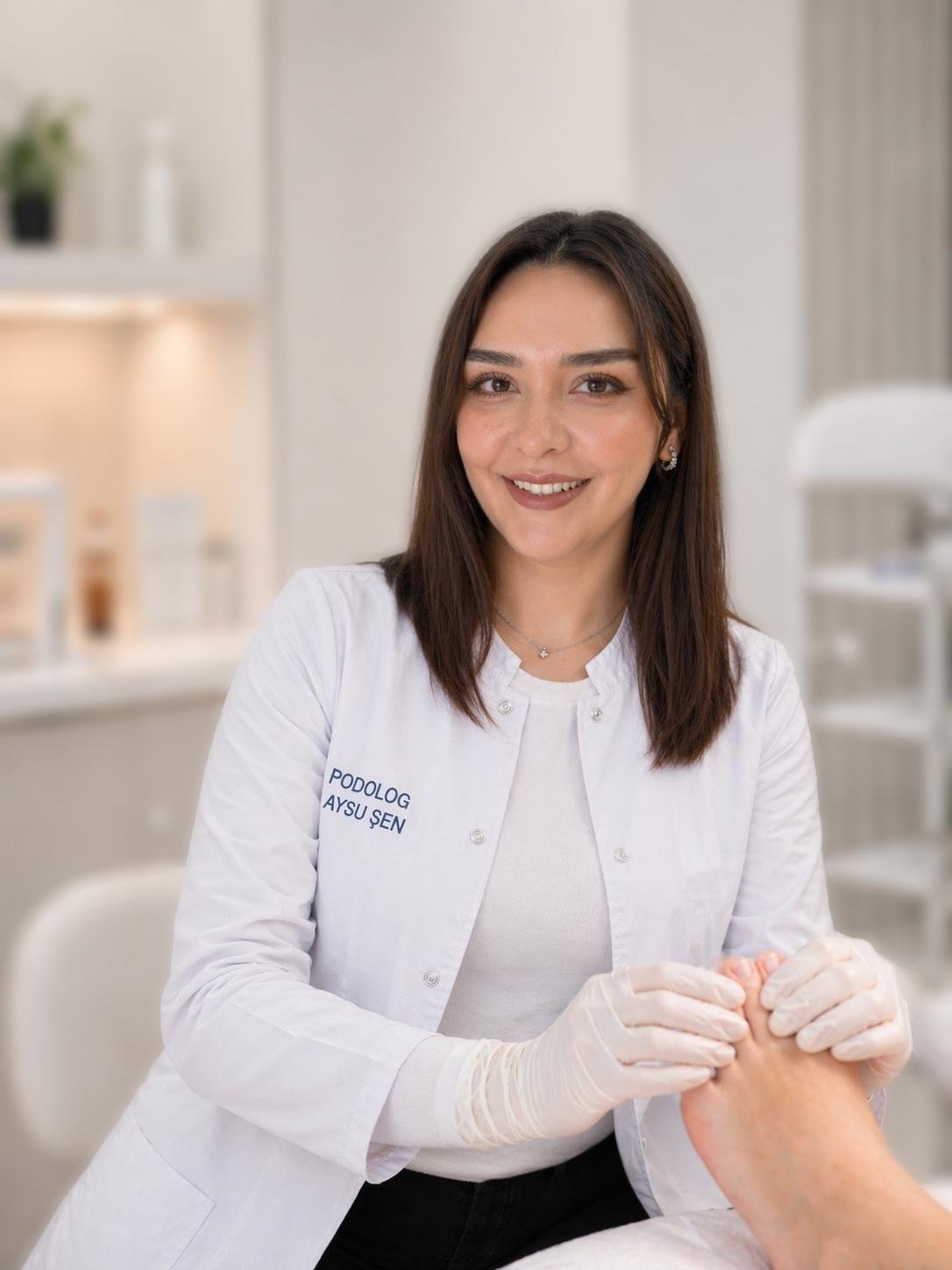
Podology is a field focused on keeping feet healthy and providing care and support for common foot problems. A podologist works on issues such as ingrown toenails, corns, thickened or misshapen nails, cracked heels and diabetic foot care, always under hygienic conditions. A podologist is not a medical doctor: diagnosis and medical treatment are the responsibility of a physician.
At her practice in Ataşehir, Istanbul, podologist Aysu Şen treats foot health as part of your everyday quality of life. The aim is not only to address the problem that brought you in, but also to work out with you the habits that can help make it less likely to come back.
Who can see a podologist?
Podological care can suit anyone who wants to look after their feet. It may be especially helpful if you:
- Have recurring ingrown toenails or tenderness along the nail edge;
- Find walking uncomfortable because of corns, calluses or cracked heels;
- Struggle to cut thickened or misshapen nails yourself;
- Live with diabetes and need regular foot checks;
- Spend long hours on your feet, play sport, or would like extra support with foot care as you get older.
Our approach
Prevention first
Small changes in the feet can, over time, make walking and daily movement harder. That is why every appointment includes a conversation about what may be behind the problem, along with practical advice you can follow at home on footwear, nail cutting and skin care.
A care plan tailored to you
No two feet are the same. Your age, activity level, footwear, any long-term conditions such as diabetes and your personal sensitivities are all taken into account to build a care plan that suits you. The plan is reviewed and adjusted at follow-up visits as needed.
Hygiene and sterilisation
Your safety comes first. Reusable metal instruments are cleaned, disinfected and then sterilised; single-use materials are opened fresh for every client. Work surfaces are disinfected between appointments.
Clear, open communication
Before anything is done, you will hear in plain language what is planned, why, and how it will go. You can ask questions at any point, and if you feel uncomfortable you can ask to pause. If anything comes up after your visit, you are welcome to get in touch between appointments.
Referral to a doctor when needed
If the assessment reveals signs of infection, an open wound, a circulation problem or anything else outside the scope of podology, you will be advised to see the appropriate physician (for example a dermatologist, orthopaedic specialist, endocrinologist or vascular surgeon). Podological care can then continue alongside the plan your doctor recommends.
What to expect at your first visit
- Initial conversation: We talk briefly about your concern, how long it has been going on, your general health and the shoes you wear most.
- Foot assessment: Your nails, skin, pressure points and any areas rubbed by footwear are examined.
- Your plan: The suggested podological care and any follow-up needs are explained, and nothing starts without your agreement.
- Care: The procedure is carried out with sterile instruments, with your comfort as the priority.
- Home care advice: You leave with clear guidance on what to look out for and suggestions for your next visit.
It helps if you come with nail polish removed and bring the shoes you wear most often. If you have diabetes, take blood thinners or have any known allergies, please mention this at the start of the appointment.
A calm setting in Ataşehir
Appointments take place in a quiet, private setting within the Atapark Konutları residences in Atatürk Mahallesi, Ataşehir. The schedule is planned so that every client has enough time and waiting is kept short, which means your visit is never rushed and your questions get proper answers.
Training and certificates
[Add your training and certificate details here.]
Contact and appointments
To book an appointment or ask a question, get in touch via WhatsApp, by phone (+90 530 617 10 03) or by email (podologaysusen@gmail.com).

